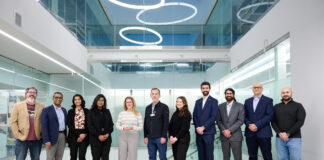
Queen’s University’s Centre for International and Defence Policy (CIDP) announced two grants to support the launch of the Global Feminist Resilience Network last week, totalling $30,000 to help fund the network that will connect existing research programs in a data preservation effort.
Dr. Stéfanie von Hlatky, Queen’s Faculty of Arts and Science researcher and co-lead of the network, says the main priority of the network is to pushback against the growing backlash against equity, diversity and inclusion efforts and expertise, especially in the United States.
The network connects Queen’s and other institutions in Canada and throughout the world that have launched initiatives related to women, peace, and promoting gender security.
Dr. von Hlatky says the role of the network will be to preserve data that in recent years has found itself in danger of erasure, with some expertise and data sources disappearing already.
“The impetus behind [the network] is kind of a rollback of women’s rights worldwide, but especially what we’ve seen in the United States with growing backlash against equity, diversity and inclusion,” Dr. von Hlatky said.
“For us researchers, this has impact on our ability to do our work… our role will really be to try to collect and protect the data because some of those documents and those data sources are being wiped out from websites.”
The aim of the work done by the network, she says, is to allow policy makers and the academic community to continue to do their work through a gender lens, and for the next generation of experts to be aided in their work in what has become a more hostile research environment.
It’s a partial response to a growing wave of dismissiveness towards scientific evidence and pushing policy in spite of that evidence.
“We’re seeing the refusal to engage with scientific evidence,” said Dr. von Hlatky.
“And so you’re seeing some resistance and pushback against that, certainly within the global scientific community. And one way to push back against that is to protect the evidence base… we’re quite alarmed with the trends that we’re seeing in the United States. So this is a way to be able to counter some of those trends and over the long term bounce back better so that we have the data to continue this kind of work.”
So far Dr. von Hlatky says some actions taken in the United States have been devastating in the short term and it’s important now to try to take a long term of view of preserving evidence for a time when the political climate is more welcoming of this type of research.
The network will bring together a variety of experts at universities worldwide, but Queen’s will act as the defacto hub and homebase of the research network.
Dr. von Hlatky says The CIDP already has an engaged community of experts on gender and security and provides a foundation to further build upon, with different roles becoming more specified as it gains its legs.
“We have baseline resources that are nested within the Center for International and Defense Policy as well as a critical mass of expertise which allows us to lead credibly in this space,” Dr. von Hlatky said.
“I think that we’ll see different partners aking on different roles and responsibilities as we roll out this network… But the main focal point will be at Queen’s in Kingston.”
While the network’s genesis has largely been in response to the suppression of certain areas of scientific research in the United States, it doesn’t mean there aren’t concerns about such growing trends in Canada and other democracies.
Dr. von Hlatky says some experts fear that if the type of political rhetoric seen in the United States is able to thrive, the country’s massive influence could force other countries to turn a blind eye, or even turn back progress made on gender equality issues.
“Our fear is that other countries in their interactions with the United States won’t push back, but when all is done, ignore or try to put that issue on the back burner and de-prioritize it,” Dr. von Hlatky said.
“Even without overt hostility or the types of cutting of funding and cutting of expertise that we’ve seen in the United States, our fear is that US allies in an effort to kind of appease the White House or the US in bilateral or multilateral dealings will completely de-prioritize this agenda… through academic research, we’re hoping to take a more long-term approach, stay focused on the research.”
The network’s official launch, or first meeting with all partners, will take place in Brussels, Belgium on the week of October 13.