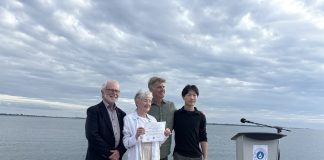
Kingston’s hospital network will be the site of the first ever Health Canada approved clinical trials examining daily, at-home use of micro doses of psilocybin – the active psychedelic compound found in magic mushrooms.
While it’s not the first time KHSC has been playing a leading role in medical psilocybin research, it is the first time Kingston – or anywhere in the country for that matter – will explore the medical potential of microdoses, as opposed to more common research that looks at macrodoses for helping to deal with different mental and emotional ailments.
This study specifically looks at the impact a daily microdose (between 2 and 3 milligrams) can have on the day to day anxiety levels of people with Generalized Anxiety Disorder (GAD).
Dr. Claudio Soares, the lead investigator on the research, says patients would take a microdose similarly to an antidepressant or any over the counter drug.
He says the goal of the research is to provide more options, especially for those who haven’t had luck with other treatments available.
“You have between 40 to 60% of patients responding to antidepressants,” Dr. Soares said.
“Not everybody can respond and not everybody can tolerate the side effects. Psychotherapy requires a lot of commitment, but also not everybody has access to psychotherapy, and it also doesn’t work for everybody. So, I think what we’re looking at is really adding more tools into your toolbox to have more resources for anxiety.”
He says the data on psychedelics so far suggests that treatment works very fast and with very few side effects.
The research team is hoping that this trial reinforces that.
“The few subjects that we have that completed this study show some incredible responses within the first week of treatment, which is much faster than you see with antidepressants,” Dr. Soares said.
“With very little, if any, side effects. So, if that turns out to be true, in the larger scale, you probably have a very well tolerated and very effective treatment.”
The amount taken on a daily basis isn’t enough to cause hallucinations of any kind, unlike in macrodosing which is generally used as a catalyst for psychotherapy in studies.
The study at KHSC involves patients taking the first microdose at the hospital and being observed for two hours after, then taking a week’s worth of doses home, reporting and repeating weekly for four weeks.
After that point, some patients will be switched to a placebo while some will remain on the actual psilocybin.
The study is ongoing and researchers are seeking adults living with GAD to join, and Dr. Soares says they’re particularly looking for people without exposure to psychedelics or without recent use medically or recreationally.
He said as the stigma around psychedelics continues to lift little by little, there can be some difficulty in finding patients who have no exposure, yet are willing to have a psychedelic experience – however he says the lack of any ‘trip’ with a microdose takes away some people’s reservations.
“You have people that might have that stigma or reluctance to try psilocybin,” Dr. Soares said.
“But the fact that it’s a microdosing and doesn’t have the trip or the high, for a lot of those folks, is a plus.”
He says in general the one downside of stigma dissipating is that it’s getting more difficult for studies to find patients with no exposure, and that the legalization of cannabis for example all but did away with medical research on the substance.
The research team is seeking subjects aged between 18 and 60 with a GAD diagnosis but otherwise healthy, those interested in more information can contact research@queensu.ca.